Dentist in Muskegon: Why Choosing the Right Dental Office Matters
Looking for a trusted dentist in Muskegon? Learn how choosing the right dental office supports long-term oral health and better care.

Home | Understanding the 5 Stages of Tooth Decay
This blog breaks down the stages of tooth decay, explaining how cavities form, what causes them, and how decay progresses when left untreated. You’ll also learn practical ways to prevent decay through daily care and regular dental visits, helping you protect your smile from start to finish.
At Bruce G Jones Dental, we believe knowledge is power when it comes to protecting your smile. One of the most common oral health concerns we see is tooth decay, and understanding the stages of tooth decay can help you recognize problems early and prevent lasting damage. In this blog, we’ll walk you through how decay develops, what causes it, and how you can stop it before it starts.
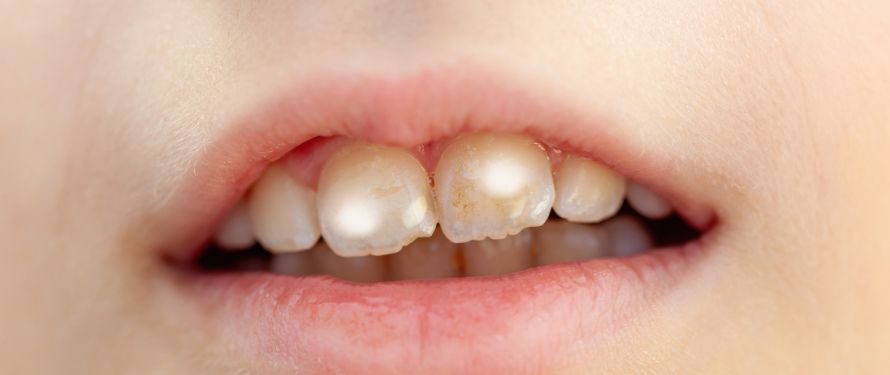
The first of the stages of tooth decay begins with demineralization. At this point, acids produced by oral bacteria start to break down the tooth enamel—the outer protective layer of your teeth. You may notice white spots on the surface of your teeth, which indicate the early loss of minerals. This can be considered the early stage of tooth cavity, or stage 1 early cavity.
💡 Prevention Tip: Brush twice a day with fluoride toothpaste, use an electric toothbrush, and avoid sugary snacks like candy to help remineralize enamel and reverse early damage. Incorporating mouthwash can also aid in fighting dental plaque and boosting oral hygiene.
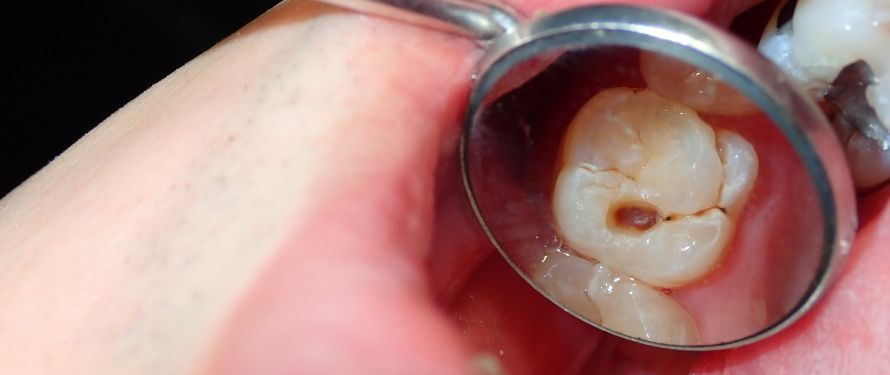
If demineralization goes untreated, it leads to the second stage: enamel decay. The white spots darken, and small cavities begin to form as the enamel breaks down further. This is part of the cavities early stages and one of the recognizable dental caries stages.
💡 Prevention Tip: Professional teeth cleaning, regular dental hygienist visits, and early exam appointments at Bruce G Jones Dental can catch and treat this stage before it worsens.
Once decay reaches the dentin—the softer layer beneath the enamel—it progresses more quickly. At this point, you may experience sensitivity to hot, cold, or sweet drinks and meals. This is a pivotal point in the dental decay stages.
💡 Prevention Tip: Don’t ignore tooth sensitivity or pain. Early therapy, such as fillings or resin restorations, can stop further damage and save the tooth structure.
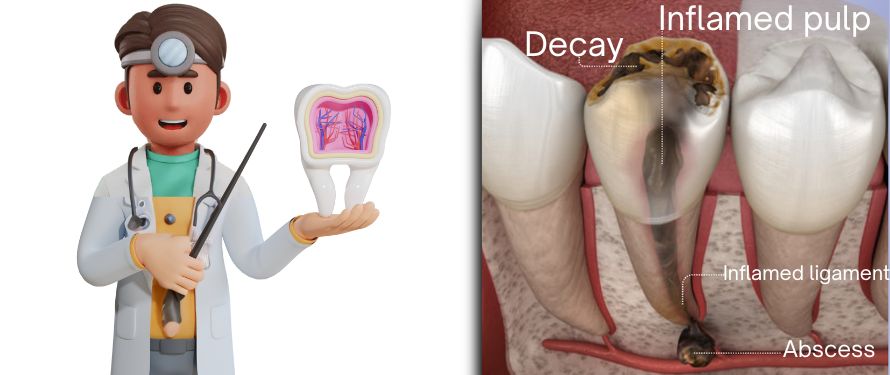
When decay reaches the pulp, where the tooth’s nerves and blood vessels are located, it can cause intense pain and inflammation. This stage often requires a root canal or other canal therapy to save the tooth. Known medically as pulp necrosis, this stage requires urgent care.
💡 Prevention Tip: Listen to your symptoms and don’t delay treatment. Catching decay before it reaches the pulp can help you avoid more invasive procedures or surgery.
In the most advanced of the stages of tooth decay, infection can spread from the pulp to surrounding tissues, forming a painful abscess. Swelling, pus, and severe toothache are common signs, and this stage can affect your overall health
💡 Prevention Tip: Seek immediate care if you suspect an abscess. We offer gentle, effective treatment and may prescribe an antibiotic if necessary. Sedation options are available for patients with dental anxiety.
Tooth decay is caused by dental plaque—a sticky film of bacteria that feeds on sugars and starches. When plaque isn’t removed through daily brushing, flossing, and proper hygiene, it produces acids that erode tooth enamel. Risk factors include a high-sugar diet, dry mouth, poor oral hygiene, and infrequent dental visits. According to the Centers for Disease Control and Prevention and the Mayo Clinic, untreated decay can lead to tooth loss and systemic complications.

Looking for a trusted dentist in Muskegon? Learn how choosing the right dental office supports long-term oral health and better care.


Looking for a pediatric dentist in Muskegon? Learn what parents should look for when choosing dental care for children.
Searching for a same-day dentist near me usually means you need help now. Whether it’s pain, swelling, or damage, waiting is not an option. Understanding what to expect can make the process faster and less stressful. This guide walks you through every step.

The stages of tooth decay include demineralization, enamel decay, dentin decay, pulp damage, and abscess formation. Each stage represents a progression of damage, from early white spots on the tooth enamel to painful infections that may require a root canal or even surgery.
Yes, the early stage of tooth cavity, also known as stage 1 early cavity, can often be reversed through improved oral hygiene, a fluoride-rich diet, and the use of fluoride toothpaste. Catching decay early is key to avoiding long-term damage.
Tooth decay is caused by bacteria in dental plaque that feed on sugar, producing acid that wears away the tooth enamel. Poor hygiene, frequent candy consumption, dry mouth, and a lack of regular teeth cleaning appointments all contribute to decay.
To prevent advanced dental decay stages, brush and floss daily, use mouthwash, limit sugary and acidic meals and drinks, and visit your dental hygienist for regular exams. Early detection can help avoid complications like pulp necrosis, abscess, and tooth loss.
Many dental insurance plans cover preventive services like cleanings, exams, and fluoride treatments. Coverage for procedures like fillings, root canals, crowns, or dental implants varies, so it’s best to check with your provider and the team at Bruce G Jones Dental for guidance.